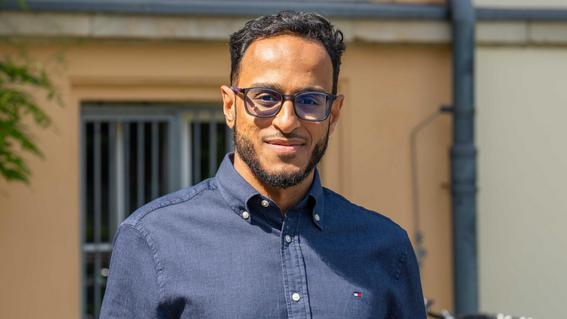
What is your academic and professional background?
I am a Lecturer in Commercial Law at King Faisal University in Saudi Arabia. My academic, practical, and research interests focus on the intersection of commercial law and digitalization, particularly FinTech companies, e-commerce, consumer protection, and privacy issues. Alongside my academic role and membership in the College of Law’s Community Partnership Committee, I serve as a part-time legal consultant at a Saudi law firm and am currently working on a legal-cultural project in China under the Saudi Ministry of Culture.
Why did you choose to participate in the AI, Legal Tech and Operations summer program?
I chose to participate for several reasons: first, my personal passion for digital legal projects and technology governance. Second, I wanted to invest my two-month summer break productively in advancing my professional and academic development. Finally, the fact that the program is offered by a highly accredited, trusted, and law-exclusive institution like Bucerius, combined with its stellar reputation and Germany’s excellence in high-quality technological initiatives, made it the ideal choice for me.
How did the Berlin Study Trip contribute to the learning experience in the program?
The Berlin Study Trip was a truly exceptional experience. Although short, it was rich in value, serious insights, and great enjoyment. The trip was exceptionally well-organized, with flawless punctuality across every transit. We visited three leading entities and gained direct exposure to innovative practices in law and technology inside their Berlin headquarters, which significantly broadened our horizons and provided a fresh practical perspective. The following day featured a city tour of Berlin before heading back. In addition, the trip strengthened the bonds among participants, offering us a wonderful opportunity to connect and get to know each other much better.
The summer program ends with a multi-day hackathon. What can you tell us about the challenge and the experience this year?
I have previously participated in two hackathons and was nominated for a third in Saudi Arabia, but this experience was completely different due to its international scope. Working with a diverse team - half of whom had prior experience in global hackathons - introduced me to new perspectives, techniques, and methodologies in planning and prototyping. Honestly, it was a beautiful and highly enriching experience; we had to work under tight time constraints and continuously pivot our ideas to deliver a practical and viable prototype. The hackathon was truly the capstone of the entire program and a real application of everything we learned.
How was studying in such a diverse group beneficial to the learning experience?
In fact, the group was remarkably diverse in terms of nationality, professional experience, academic backgrounds, and age groups. This rich diversity deeply enhanced our daily discussions, allowing us to see legal and technological challenges from multiple perspectives. On that note, I would like to express my gratitude for the warm and special welcome during the orientation, honoring me as the first and only participant from Saudi Arabia up to this edition. It added a truly special dimension to my experience and helped us build a strong, diverse international network.
